
木棉花的春天
中国机器人产业“加速跑”为世界提供新机遇_我的网站

一 |
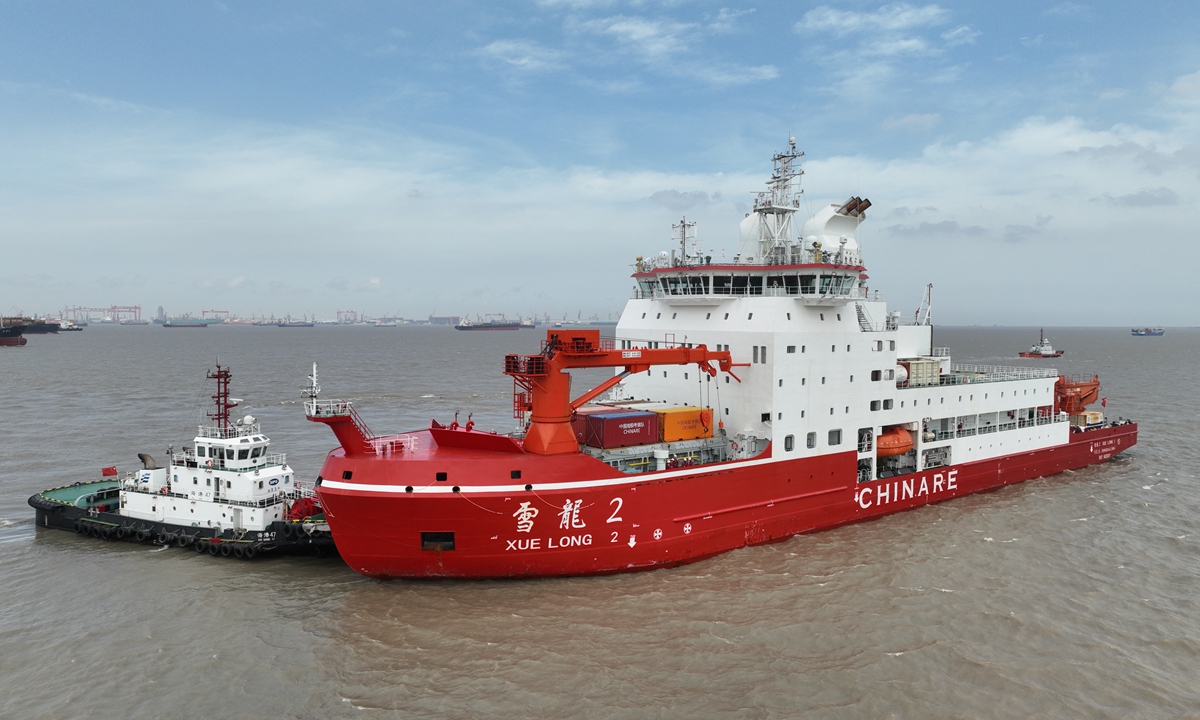
After completing the first stage of comprehensive ocean station surveys on Friday, Xuelong 2 sailed toward higher latitudes and selected a large, relatively flat piece of sea ice about 1.5 meters thick in a densely packed ice zone for its first ice station.
According to Lin Long, captain of the Xuelong 2 sea ice team, the ice station survey conducted by the vessel during this voyage will include six short-term ice stations and one long-term ice station, the Xinhua News Agency reported Sunday.
More than 20 types of scientific operations will be carried out, including the deployment of expendable ice-based buoys, snow and ice-core sampling, under-ice water sampling, sea-ice remote sensing, atmospheric profiling and under-ice oceanographic observations.
Lan Musheng, assistant to the chief scientist of the expedition, said the researchers will comprehensively monitor changes in parameters related to the atmosphere, sea ice, upper ocean and ecological processes beneath the ice as the sea ice melts.
The observations will provide scientific data for studying the rapid changes in Arctic sea ice, the mechanisms behind those changes and the evolution of Arctic ecosystems.
The ice station work is part of China's 16th Arctic Ocean scientific expedition, which was organized by the Ministry of Natural Resources. The expedition set sail from Dalian, Northeast China's Liaoning Province on July 3.
The mission is being carried out by four vessels - Xuelong, Xuelong 2, Jidi and Tansuo-3 - and is expected to be completed in early October.
The expedition is focusing on comprehensive surveys of sea ice, hydrology, biology, ecology and the atmospheric environment in key areas of the Arctic Ocean.
The two icebreakers Xuelong and Xuelong 2 will work together on the ice station surveys. Xuelong completed surveys at 12 ice stations on Friday.
Lin said the ice station locations planned for Xuelong 2 will work in coordination with those of Xuelong to form an observation array.
The arrangement will allow researchers to more deeply investigate the interactions among the atmosphere, sea ice and ocean in the central Arctic Ocean amid rapid environmental changes, as well as their coupling effects with the ecosystem.
The expedition is being conducted against a backdrop of rapid changes in the Arctic environment.
When the mission was launched in July, expedition leader Wang Jinhui said that global warming was driving rapid and profound changes in the Arctic natural environment, with trends such as sea-ice melting intensifying.
The expedition is therefore designed not only to monitor environmental changes but also to investigate frontier scientific questions, including the dynamic evolution of the oceanic crust.
Working on sea ice also presents significant safety challenges. Low temperatures and complex ice-surface conditions can pose risks to researchers, while polar bears are considered the biggest safety risk during ice station operations.
The expedition team has therefore formulated specific bear-prevention and emergency response plans and equipped personnel with various types of bear-deterrence equipment and emergency supplies to ensure their safety.
。

二 |
在2026世界机器人大会上,机器人乐队在表演(8月20日摄)。

三 | 记者 张晨霖 摄北京8月23日电 题:中国机器人产业“加速跑”为世界提供新机遇 记者 摊开面坯、拿勺撒酱、放入烤箱、烤熟取出、装盒切割……在2026世界机器人大会展区,一款会烤披萨的轮式双臂人形机器人吸引观众驻足观看。 2026世界机器人大会于8月19日至23日在北京举行,本届大会以“人机共生,产需共融”为主题,吸引300多家国内外知名企业及超3000件创新产品参展。中国持续开展科技攻坚、推动国际科技创新合作,加速科技研发和产业化进程,让中国机器人产业从技术突破迈向场景贯通,使相关技术及产品加速走向全球。

四 | “这是我们公司第三次参加世界机器人大会,相比之前静态的、完成单一指令的机器人,公司此次参展的机器人更加‘聪明’,能完成的任务更加复杂、更加精细。”优理奇机器人科技(苏州)有限公司公关负责人卢希喆说,“除了国内客户,公司的科研、理货、安防等场景的机器人产品还交付给俄罗斯、美国、印度、新加坡等国客户。未来,公司将不断拓展机器人的能力边界、促进规模化应用。

五 | ” 除了烤披萨,优理奇展台的机器人还会泡茶、画水墨画、整理床铺,或是化身键盘手、鼓手、吉他手组成乐队,演奏的《北京欢迎你》等曲目悠扬悦耳。 在2026世界机器人大会展区的另一展台上,用于工业产线、零售店等场景的机器人各司其职、有条不紊。 将一堆货箱从一处拆垛,然后搬运到另一处码垛,北京银河通用机器人有限公司的重载机器人Galbot S1展现出在持续感知周围变化,并根据物料状态实时调整动作的能力。 据介绍,Galbot S1已在宁德时代生产线实现7×24小时常态化运行,能满足生产线对于效率、精度和稳定性的要求。同时,银河通用也已与上汽、北汽、博世、现代等产业伙伴展开合作,推动具身智能进一步进入制造体系。 中国电子学会理事长徐晓兰说,近些年来,中国机器人产业实现了“从小到大”“由弱变强”的巨大跨越,连续多年成为全球最大工业机器人市场,人形机器人产业整体水平处于全球领先地位。
在2026世界机器人大会上,银河通用的一款机器人在机器人零售店场景内为消费者拿取商品(8月19日摄)。记者 鞠焕宗 摄

六 | 据介绍,公司专注于脑机接口与可穿戴机器人领域,此前产品主要销往欧美市场。随着中国机器人市场消费的快速扩张以及中国公司在脑机接口领域的技术提升,未来希望加强和中国公司的合作,开拓广阔的中国市场。 中国工信部数据显示,2025年机器人产业规模以上企业营业收入突破3000亿元,近五年年均增速超20%;今年上半年营业收入达到1655亿元,同比增长24.5%。

七 | 日资企业SMC(中国)有限公司是气动元件研发制造商,近年来和一些中国机器人企业合作,为产业机器人高度自动化、柔性化带来了突破性变革和多样化功能,使得机器人工作更高效。工作人员张世纪说,公司已多次参加世界机器人大会,未来将继续深耕中国市场,进一步促进工业智能化。 大会期间,“全球机器人应用探索计划”发布,该计划将面向全球征集应用场景需求,每年从中遴选出1000个应用场景开展机器人的免费试用与二次开发,以实现技术落地与场景应用双向赋能,构建开放共赢的全球机器人产业创新生态。 智身科技联合创始人刘宇龙说,今年上半年,公司具身智能机器人量产和交付上万台。目前,公司机器人主要应用在应急消防、工业巡检、安防巡逻、科教文娱等领域。

八 | 我们希望携手产业链的上下游伙伴,一起推动具身智能产业发展,让具身智能技术惠及大众。
Current article:http://uo7oh.shangfochengcongshuaizhuang.buzz/news/20260826_9669.html
Published on:19:09:30